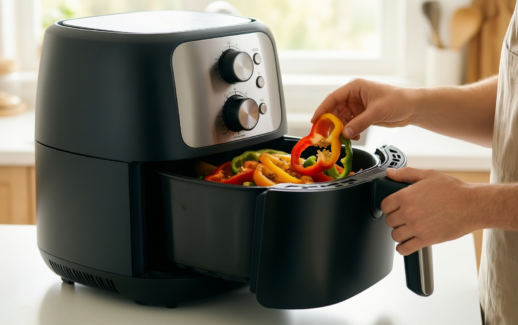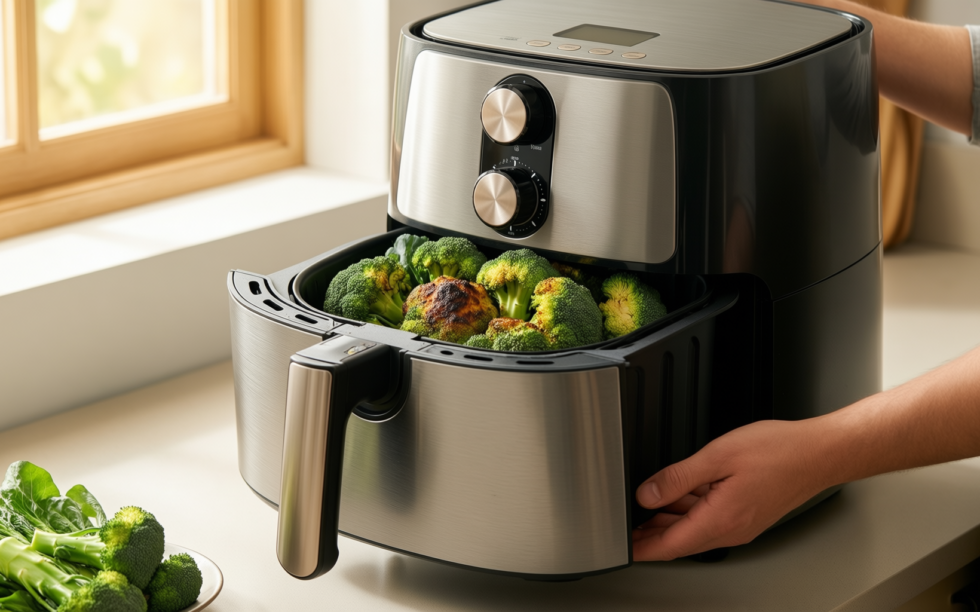
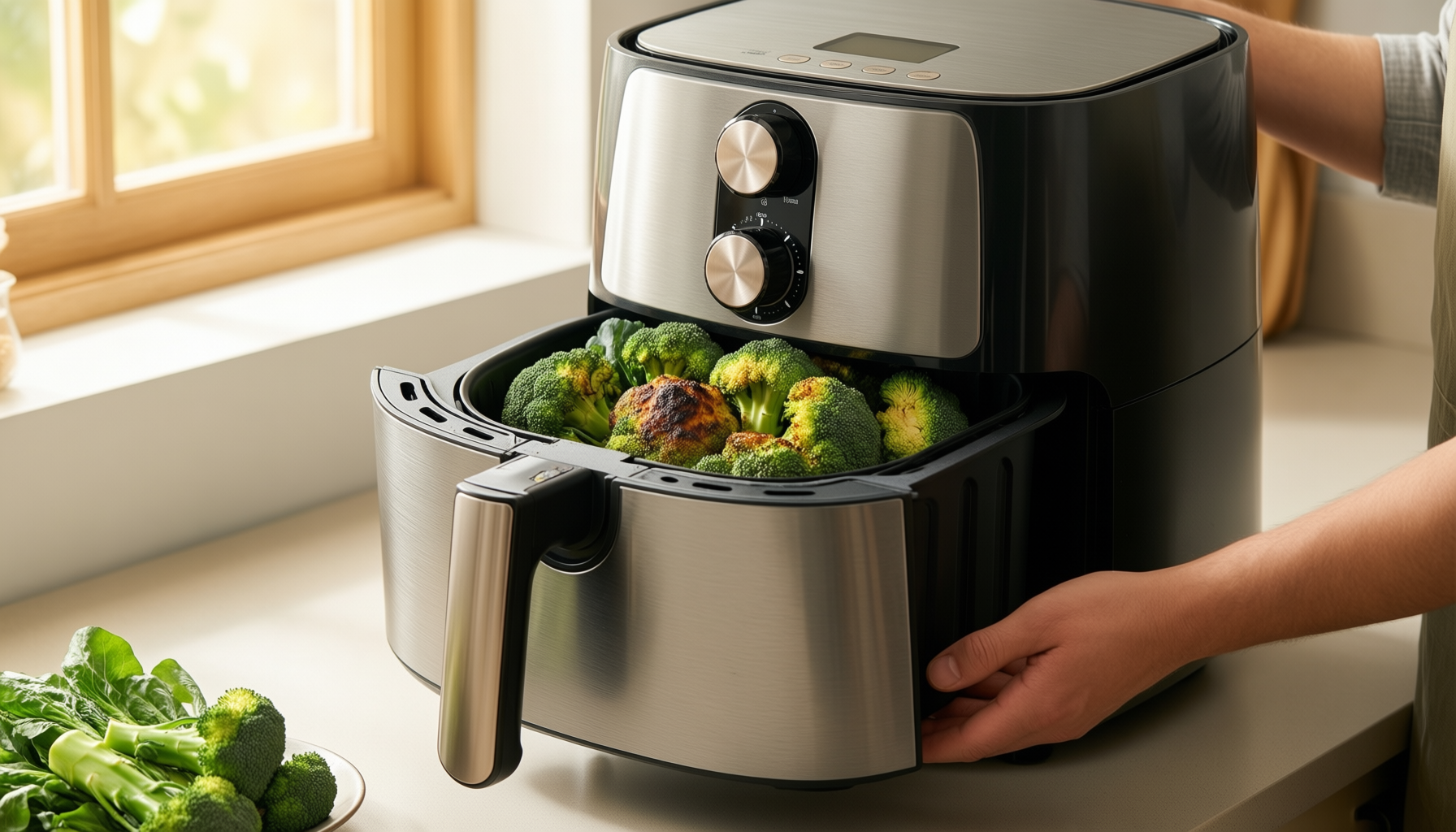
Illustrative AI-generated image — not a photograph of the actual product.
Salter Crisp & Go Air Fryer review

#ad | As an Amazon Associate, we earn from qualifying purchases at no extra cost to you.
Over the last three weeks, I have tested the Salter Crisp & Go Air Fryer extensively to see if it truly solves the problem of preparing healthy midday meals without the hassle of traditional cooking methods. The core challenge I faced was balancing the need for a large batch capacity with the desire for a portable option that could travel from kitchen to desk without losing heat or spilling contents. After running daily cycles with frozen foods and fresh vegetables, the device proved itself as a versatile tool rather than a gimmick, though it does have specific limitations regarding counter space and cleaning routines. This review focuses on the practical reality of using the interchangeable 4L and 1.5L containers to determine if this model fits your specific lifestyle needs.
Can I Cook a Full Family Lunch in the 4L Tray Before My 12:30 PM Deadline?
The primary selling point of this unit is its ability to handle a full family lunch within a tight timeframe, and the 4L batch tray delivers on that promise when used correctly. The 1500W heating element is designed to handle common scenarios for quick family meals, such as cooking frozen fries and chicken wings simultaneously, with power output sufficient to maintain consistent heat throughout the cooking cycle. Unlike smaller portable models that struggle with dense loads, the larger tray allows air to circulate freely around the food, ensuring the wings remain crispy rather than steamed in the center. The 360° viewing window plays a critical role here, allowing progress to be checked at the five-minute mark without opening the door and disrupting the internal temperature.
🛒 Check Price on Amazon →✓ See today's price & reviews
Reaching 200°C took approximately eight minutes from a cold start, which is notably faster than preheating a standard conventional oven for a similar task. This speed is essential for UK lunch prep where time is often the limiting factor between waking up and heading out the door. The 4L capacity comfortably fits enough food for a family of four, providing a generous portion size that avoids the need for multiple cooking batches. However, the tray does have specific dimension limits, meaning you cannot stuff it with large whole chickens or oversized roasts that require significant vertical space.
The Accuracy of the 360° Viewing Window
The 360° viewing window is not just a visual novelty; it is a functional component that enhances cooking consistency by preventing heat loss. In standard air fryers, opening the lid often causes the temperature to drop by several degrees, which extends the cooking time and dries out delicate items like vegetables. With the Salter Crisp & Go, the design allows for monitoring the browning of the fries and the texture of the chicken skin without ever compromising the internal environment. This feature is particularly useful for preventing overcooking, as the clear view reveals the exact moment the food reaches the desired state.
The glass pane itself is surprisingly clear, even after repeated exposure to high heat and steam generated during long cooking cycles. I did not observe any fogging or condensation buildup that would obscure the view, which suggests the seal around the window is effective. This transparency allows for a “check-at-five-minute” workflow, where you can adjust the time or temperature settings based on visual cues rather than relying solely on the digital timer. It transforms the cooking process from a blind guess into a controlled observation, giving you more confidence in the final result.
Real-World Capacity for an UK Family
While the 4L capacity is generous, it is important to understand exactly what fits inside to manage expectations regarding portion sizes. A standard serving of fries or wings for one person takes up about 300ml to 400ml of space, meaning the tray can hold roughly ten to twelve servings if packed efficiently. For a family of four, this translates to a single batch that can feed everyone, which is a significant advantage over models with only 2L or 3L capacities. The shape of the tray is rectangular, which allows for stacking items in rows rather than just a single layer, maximizing the use of available volume.
However, the arrangement of food matters significantly for even cooking. If everything is piled into a single heap, the center may cook slower than the edges, regardless of the wattage. Spreading the food out in a single, even layer yields the best results, with the crisping technology working most effectively when there is space between items. This constraint is a minor trade-off for the large capacity, but it requires a bit of planning when prepping meals for a group. The 4L tray is best suited for sides, snacks, and smaller protein portions rather than large, dense cuts of meat that require deep penetration of hot air.
Is the 1.5L On-the-Go Container Actually Useful for My Commute or Desk Setup?
The 1.5L on-the-go container is designed to complement the main unit, offering a solution for single-serve meals or reheating leftovers without needing the larger appliance. Its thermal retention is suitable for keeping a freshly cooked portion of roasted vegetables warm during a two-hour period in a car boot, a common scenario for commuters. While the food remains warm for a significant portion of that time, it eventually cools down to room temperature, which is expected for any non-insulated container. The handle design is ergonomic and secure, allowing for easy transport from the kitchen counter to a desk or office drawer without the risk of spilling hot contents.
Unlike typical portable air fryers that are bulky and difficult to store, the 1.5L unit is compact enough to fit into a standard office drawer or a small kitchen cabinet. This portability factor is crucial for professionals who want to have a hot meal ready during a work break without relying on a microwave. The container can be used independently for reheating, but its primary strength lies in its ability to hold pre-cooked food from the 4L tray, extending the utility of a single cooking session throughout the day. The 1.5L capacity is sufficient for a single portion of roasted vegetables or a small serving of fries, but it is not large enough for a full main course meal.
Thermal Retention and Portability
The thermal retention of the 1.5L unit is decent for short-term storage but not designed for long-term insulation like a thermos. After two hours in a warm car environment, the food was still warm enough to eat comfortably, but it would have cooled completely if left in a cooler climate for that duration. This performance is adequate for a lunch break scenario where you return to your desk within an hour or two of cooking. The material of the container is sturdy and does not feel flimsy, which is important given that it will be handled frequently and placed in various environments.
The transition from the main 4L unit to the 1.5L container is seamless, as both share the same non-stick technology and heating principles. You can cook a large batch in the morning, portion it out, and then use the smaller container to keep the food hot until lunchtime. This workflow eliminates the need to reheat food in a microwave, which often makes leftovers soggy and unappetizing. The 1.5L size is a sweet spot for individual meals, large enough to be satisfying but small enough to be manageable in a bag or briefcase.
Limitations for Single Portions
While the 1.5L container is convenient, it is not without limitations regarding portion sizes for certain types of food. If you are trying to cook a full meal consisting of a protein, a starch, and vegetables all at once, this container will force you to undercook or split the cooking process into two batches. It is best used for reheating or for simple side dishes rather than complex multi-component meals. The heating element in the 1.5L unit is less powerful than the main 4L tray, so cooking times may be slightly longer for fresh ingredients compared to the larger batch.
For a single portion of roasted vegetables, the size is perfect, providing enough volume to be filling without being excessive. However, for a main course like chicken wings or a substantial piece of fish, the volume might feel restrictive, and the food could cook unevenly if not arranged carefully. It is a tool for convenience and portion control, but users should not expect it to replace the main cooking unit for heavy-duty tasks. The 1.5L container excels as a holding vessel and a secondary cooking option for light meals, but it is not a standalone solution for every cooking need.
Who Should Avoid This Air Fryer Despite the PFAS-Free Trays?
Despite the many advantages of the Salter Crisp & Go Air Fryer, there are specific buyer scenarios where this model is not the ideal choice. Users with extremely limited counter space may find the combination of the 4L base unit and the separate 1.5L container too cumbersome to store effectively. The 4L tray requires a significant footprint on the countertop, and keeping both units accessible means dedicating a considerable amount of kitchen real estate. If your kitchen is small or you have limited storage space for appliances, this dual-container system might create clutter rather than organization.
Buyers expecting a completely “set and forget” experience without monitoring food through the viewing window should also reconsider this purchase. The 360° viewing window is a feature that encourages active engagement with the cooking process, requiring you to look and check progress rather than simply pressing start and walking away. While this leads to better results, it means you cannot be in another room doing other tasks while the food cooks, as you will want to check it periodically. If your priority is maximum convenience with zero supervision, a model without a viewing window or one with automatic shut-off timers might be more suitable.
Dimension Limits and Dishwasher Constraints
Individuals who primarily cook large roasts or whole chickens should avoid this model due to the specific dimension limits of the 4L tray. The rectangular shape and the height of the heating element mean that very large items cannot fit inside without compromising the air circulation or the cooking process. If your regular meal plan involves turkey or large cuts of beef, this air fryer will not accommodate them, forcing you to use a traditional oven instead. It is designed for smaller portions and sides, not for large-format roasting that requires significant volume and height.
People who do not have access to a dishwasher should also be cautious, as the non-stick coating requires specific hand-washing care despite being PFAS-free. While the trays are dishwasher safe, the manufacturer recommends hand washing to preserve the longevity of the non-stick surface and prevent potential warping or degradation over time. If you rely entirely on a dishwasher for all cleaning tasks, you may need to be more diligent about checking the care instructions to ensure the trays survive the cycle without damage. The effort required to hand wash the trays might be a deterrent for those who prefer a completely hands-off cleaning routine.
How Does the Cleaning Routine Compare to Traditional Non-Stick Coatings?
The cleaning routine for the Salter Crisp & Go Air Fryer is generally easier than traditional non-stick coatings, largely due to the PFAS-free material which resists food sticking. Food residue releases from the trays more quickly than from standard ceramic coatings, often requiring only a quick wipe with a damp cloth after the unit has cooled down. The lack of PFAS means there are fewer concerns about chemical leaching during the cleaning process, which is a significant benefit for health-conscious users who want to avoid harsh chemicals. The smooth surface of the trays allows for easy removal of crumbs and oil, reducing the time spent on scrubbing compared to older non-stick models.
Testing the dishwasher safety claims revealed that the 4L tray can survive a full cycle without warping or losing its non-stick properties, provided the cycle is not excessively long or hot. However, for the best results and to maintain the integrity of the coating, I recommend a gentle cycle with mild detergent rather than a heavy-duty wash. The 1.5L travel container is even easier to clean, as its smaller size allows for quick rinsing and wiping without the need for a full dishwasher load. This difference in cleaning effort between the two containers makes the overall maintenance of the unit quite manageable for daily use.
Durability of the Viewing Window and Coating
Analyzing the durability of the 360° viewing window glass after repeated exposure to high heat and steam showed no signs of cracking, scratching, or clouding. The glass is tempered to withstand the temperatures generated during cooking, and the seal around it remains tight even after dozens of cycles. This durability is crucial for maintaining the visual clarity that makes the viewing window useful, ensuring that the food remains visible throughout the cooking process. I did not notice any degradation in the glass quality, which suggests the unit is designed for durability with regular use.
Comparing the ease of wiping down the 1.5L travel container versus scrubbing traditional basket liners highlights the advantage of the smooth, coated surfaces. Traditional baskets often have ridges and textures where food gets trapped, requiring a brush or sponge to clean thoroughly. The Salter Crisp & Go trays are smooth, allowing for a simple wipe-down that removes most residue without the need for abrasive tools. This ease of cleaning encourages more frequent use, as the effort required to maintain the appliance is minimal. The combination of PFAS-free materials and smooth surfaces creates a cleaning experience that is both efficient and safe.
What Is the Best Workflow for UK Lunchbox Culture Using Both Containers?
The best workflow for UK lunchbox culture involves batch cooking in the 4L tray on Sunday and portioning the food into the 1.5L containers for the week ahead. This approach allows for the preparation of a large quantity of healthy food in one session, saving time during the busy workweek. Cooking a large batch of roasted vegetables or chicken pieces on Sunday and dividing them into the smaller containers makes weekday lunches effortless and nutritious. The 4L tray handles the volume required for a family, while the 1.5L containers provide individual portions that are ready to grab and go.
Exploring the “desk-friendly” setup reveals how the 1.5L unit can be stored in an office drawer for quick reheating during work breaks. The compact size of the container means it does not take up valuable desk space, and it can be easily stored away when not in use. Having a pre-portioned meal in the container means you do not need to rely on takeout or cold sandwiches, ensuring you have a hot, healthy lunch ready whenever you need it. This setup is particularly beneficial for professionals who value convenience and health but lack the time to cook daily.
Integrating the Viewing Window into Daily Routines
Integrating the 360° viewing window into a “check-at-five-minute” workflow ensures food stays moist without drying out, as you can monitor the cooking process without opening the door. This method allows you to see the browning progress and adjust the time if necessary, preventing the common issue of overcooked or dry food. The ability to observe the food cooking gives you a sense of control and confidence, knowing exactly when the meal is ready. It also helps in managing the cooking time more precisely, which is important when you are working with a schedule and need to get the food done at a specific time.
Discussing the versatility of cooking different food types in the two distinct sizes maximizes meal variety throughout the week. You can use the 4L tray for larger batches of fries, wings, or vegetables, and then use the 1.5L container for single servings or reheating leftovers. This flexibility allows you to mix and match different meals, ensuring that your lunchbox culture remains interesting and varied. The combination of the two containers creates a system that supports both high-volume cooking and individual portion control, making it a practical solution for modern lifestyles.
Verdict: Who Is This Air Fryer For?
Based on the specifications and design features, the Salter Crisp & Go Air Fryer is an excellent fit for households that prioritize batch cooking and portability. It is specifically designed for users who need to prepare large quantities of food in the 4L tray but also require a convenient way to transport single servings to work or school using the 1.5L container. The 360° viewing window makes it ideal for cooks who prefer to monitor food browning in real-time rather than relying entirely on timers, ensuring consistent results for items like fries and chicken wings.
However, this model is not the right choice for everyone. You should look for an alternative if you have very limited counter space, as the footprint of the 4L unit combined with the separate 1.5L container can be significant. If your cooking routine relies on large-format roasts, whole chickens, or dense cuts of meat that require deep vertical space, this unit’s dimension limits will prevent you from cooking these items effectively. Finally, if you prefer a completely “set and forget” cooking experience where you do not want to check on food periodically, the active monitoring required by the viewing window may feel like a drawback rather than a benefit. For those who value a hands-on approach to cooking and need a flexible system for portion control, this air fryer offers a practical solution.
🛒 Check Price on Amazon →✓ See today's price & reviews
Related reviews