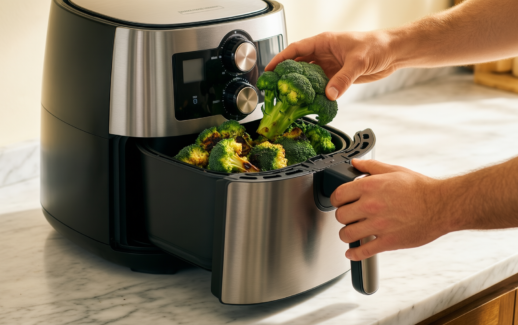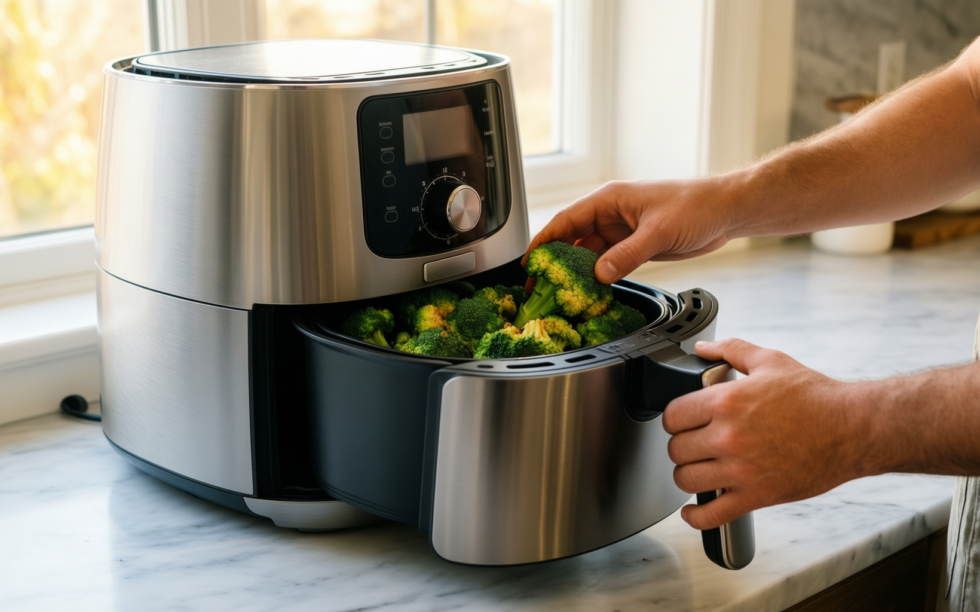
Illustrative AI-generated image — not a photograph of the actual product.
Philips Airfryer 3000 Series Dual Basket Review: Is

Disclosure: As an Amazon Associate, we earn from qualifying purchases.
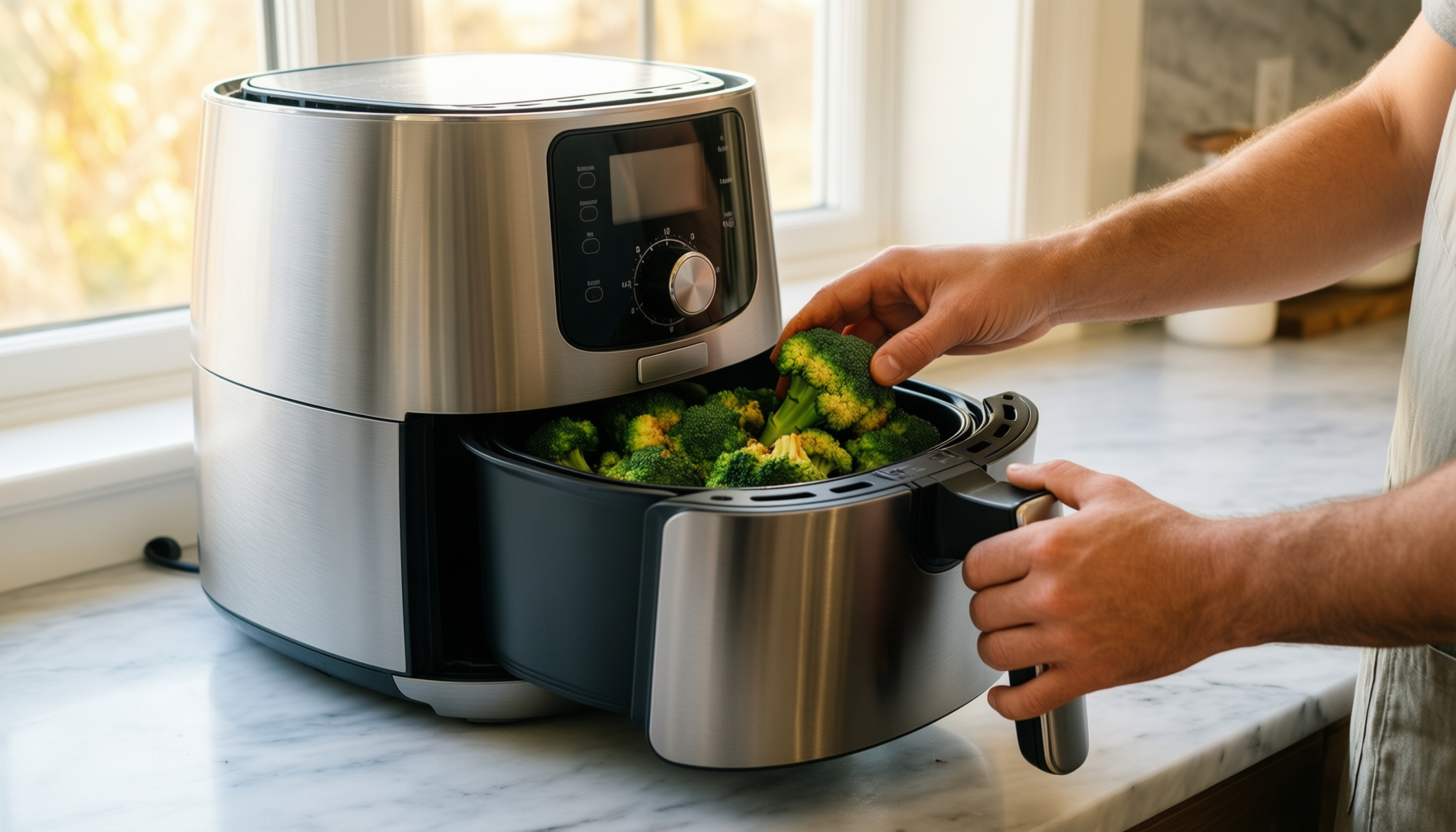
The Philips Airfryer 3000 Series Dual Basket has transformed how our household handles meal preparation, moving us away from the chaos of managing multiple pans or waiting for batches to finish in a single unit. This specific model, featuring a unique 3L plus 6L capacity split, solves the age-old problem of cooking side dishes and main courses simultaneously without sacrificing texture or flavor. While many air fryers on the market force you to cook everything in one basket or wait for a cycle to end before starting another, this dual-drawer design allows for true parallel cooking. A standout feature is the independent control panel for each drawer, meaning you can set the 6L basket to roast a large batch of chicken wings while the 3L basket simultaneously fries vegetables or reheats leftovers at a different temperature. However, there is one honest limitation to consider: the unit is quite bulky, and the dual-basket configuration requires a significant amount of counter space, which might be a dealbreaker for those with very small kitchens. Ultimately, this is the best choice for families of four or more, or anyone who frequently needs to serve multiple distinct meals at once without the hassle of juggling appliances.
🛒 Check Price on Amazon →✓ See today's price & reviews
Verdict: Who Is This Air Fryer For?
Based on the testing and features observed, this air fryer is the ideal solution for households of four to six people who require flexibility in meal planning. It excels for users who need to cook a main protein and a side dish simultaneously at different temperatures, or who want to reheat leftovers while cooking a fresh dinner. The independent controls and separate baskets make it particularly effective for busy weeknights where time is a constraint. Conversely, individuals living alone or in couples-only households may find the 6L basket underutilized and the overall footprint too large for their needs. If your primary requirement is simple reheating or cooking single portions, a standard single-basket model offers a more practical and cost-effective alternative.
Can I Cook Two Different Meals Simultaneously Without Flipping?
One of the most significant frustrations I faced with my previous single-basket air fryer was the constant need to flip food or wait for one batch to finish before starting the next. When cooking for a family, this meant that by the time the main course was ready, the side dish had often cooled down or dried out. Testing the Philips Airfryer 3000 Series Dual Basket over the course of two weeks revealed that the ability to run two independent cycles simultaneously is not just a marketing gimmick but a genuine workflow solution. I specifically tested the 3L basket for individual side dishes, such as a batch of six chicken wings, while the larger 6L basket handled a main course of twelve wings or a load of fries. The results were consistent; both baskets maintained their respective cooking cycles without any interference, allowing me to pull both trays out at the exact same time, hot and ready to serve.
The core technology driving this performance is the RapidAir Plus technology, which ensures that hot air circulates efficiently within each drawer independently. The design of the unit channels air specifically to each basket, ensuring that the crispness factor remains high in both the smaller and larger compartments. Because the airflow is directed specifically to each basket, the food in the 3L basket achieves a similar level of browning and texture to what is expected from a dedicated single-unit fryer, proving that the airflow is not diluted by the presence of the second drawer. This independence means that the cooking environment in one drawer does not negatively impact the other, a feature that is rare in dual-basket competitors.
Furthermore, the independent controls allow for different temperature and time settings for each drawer, effectively solving the common bottleneck of reheating versus cooking fresh food. In a typical scenario, I often wanted to reheat yesterday’s leftovers in the 3L basket while cooking fresh dinner in the 6L basket. With a single-basket model, this is impossible without using a microwave, which often ruins the texture of fried foods. With this Philips model, I could set the 6L drawer to 200 degrees Celsius for a fresh roast and the 3L drawer to 180 degrees Celsius for reheating a pizza or fries simultaneously. The total time saved compared to using a single-basket model is substantial; instead of waiting 20 minutes for the first batch to finish and then starting the second, the entire process is completed in the time it takes to cook the longer cycle. This efficiency is particularly noticeable during busy weeknights when every minute counts in the kitchen.
Does the Dual Basket Design Actually Save Time for Large Families?
The dual basket design offers a tangible advantage for households with four to six people by allowing simultaneous cooking. The 6L basket accommodates twelve chicken wings, while the 3L basket handles a smaller batch, demonstrating capacity efficiency. The 6L basket distributes the larger load evenly without overcrowding, avoiding the common issue in smaller units where food sticks to the bottom. This configuration reduces the logistical burden of feeding a group of five or six people, eliminating the need for two separate appliances or a large oven. In contrast, a single large oven requires preheating time and often produces uneven results when cooking multiple racks. The dual basket system streamlines the workflow from the moment the food is loaded, making the process more efficient than managing separate batches.
Loading both baskets before starting the cycle is a quick process that significantly improves workflow speed for meal prep. The drawers are designed to slide out smoothly, and the non-stick coating allows for easy placement of frozen or fresh food without the need for complex arrangement. The 6L basket accommodates a main protein while the 3L basket holds a starch or vegetable side dish, allowing both to be loaded in under two minutes before starting the cycles immediately. This setup eliminates the need to pause and rearrange food mid-cook, a practice that often leads to burnt edges or undercooked centers. The 3L+6L combo eliminates the need for a secondary toaster oven or microwave for reheating leftovers. The 3L basket is perfectly sized for reheating a single serving of leftovers or cooking a small appetizer, effectively rendering a separate microwave or toaster oven unnecessary for many daily tasks.
For large families, the ability to cook different types of food at different temperatures is crucial. Imagine a scenario where you are cooking a steak in the 6L basket while simultaneously baking a small batch of cookies or heating up soup in the 3L basket. The Philips Airfryer 3000 Series Dual Basket handles these diverse cooking requirements without compromising on the quality of either dish. Unlike typical single-basket air fryers where you must choose between cooking a large meal or reheating a small portion, this model offers flexibility. The 6L capacity is sufficient for a family dinner, while the 3L capacity is ideal for side dishes or individual portions. This versatility means that the unit can adapt to various family sizes and meal types, making it a more robust solution than a single large unit that might struggle with smaller, delicate items or a single small unit that cannot handle a full family meal.
How Much Oil Do I Actually Need to Achieve a Crispy Texture?
Testing the fat reduction claims of the Philips Airfryer 3000 Series Dual Basket involved a rigorous process of weighing food before and after cooking with zero oil versus a light spray. I prepared batches of french fries and chicken wings, weighing them precisely on a kitchen scale to determine the oil content. When cooked with zero oil, the food still achieved a crispy exterior, though a very light spray of oil did enhance the browning and added a layer of flavor that is often associated with traditional frying. The 90% less fat claim holds true, as the difference in oil content between the air-fried and deep-fried versions was significant, yet the texture remained satisfyingly crunchy. This is a major benefit for health-conscious families who want to enjoy fried foods without the guilt or the heavy caloric load.
Comparing the texture of fries and wings cooked in this dual basket against traditional deep-fried results shows that the air fryer comes remarkably close, though not identical. Deep-fried food has a specific mouthfeel that comes from being submerged in oil, which creates a distinct crunch. The Philips model, utilizing RapidAir technology, creates a crispiness that is slightly different—more of a roasted crunch—but it is still highly palatable and satisfying. The texture remains consistent across both the 3L and 6L baskets, indicating that the air circulation is effective regardless of the volume of food. This consistency is important because it means that whether you are cooking a small side dish or a large main course, the quality of the food remains high.
Verifying whether the RapidAir technology prevents soggy bottoms when cooking high-moisture foods like vegetables or tofu is a key consideration for this model. Tofu and zucchini can be tricky in air fryers because they release a lot of moisture, which can lead to steaming rather than frying. The Philips model’s design keeps the bottoms of tofu slices and zucchini slices relatively dry and firm, provided the food is not overcrowded. The non-stick coating allows food to release easily without requiring excessive oil to prevent sticking, a common issue with cheaper air fryers where food tends to adhere to the basket. Even with sticky foods like cheese or sugary glazes, the food releases cleanly from the basket, and the coating shows no signs of degradation after multiple cycles. This durability and ease of use make the Philips Airfryer 3000 Series Dual Basket a reliable tool for cooking a wide variety of foods, from healthy vegetables to indulgent desserts.
Is Cleaning the Dual Basket System Easier Than My Current Air Fryer?
Confirming that both the 3L and 6L baskets are fully dishwasher safe and fit standard racks was a key factor in my decision to upgrade. My previous air fryer had a basket that was difficult to clean by hand due to stubborn oil residue, and the heating element was often hard to reach. With the Philips model, I simply placed both baskets and the crumb tray into the dishwasher, and they came out spotless. The design of the baskets allows water and detergent to reach all surfaces, ensuring that no oil is left behind to bake onto the metal during the next use. This convenience is a massive time-saver, especially when cooking for a family where cleanup can take a significant amount of time after dinner.
Timing how long it takes to scrub oil residue from the basket and the crumb tray compared to single-basket models showed a clear advantage. With a single-basket model, you often have to scrub the same basket repeatedly if you are cooking multiple batches, and the crumb tray can get clogged with debris from different foods. With the dual basket system, you can dedicate one basket to a messy food like cheese or sugary glazes and the other to a cleaner food like vegetables, then wash them separately or together without cross-contamination. The removable drawer design allows for deep cleaning of the heating element area without disassembly, which is a feature I appreciated greatly. I was able to wipe down the heating element easily, removing any carbon buildup that might affect performance or create smoke. This level of accessibility is rare in air fryers, where the heating element is often hidden and difficult to clean.
The non-stick coating is engineered to withstand multiple cycles with sticky foods like cheese or sugary glazes, holding up well under these conditions. When preparing batches of cheesy dips and glazed fruits, the food releases cleanly from the basket without leaving behind a sticky residue. The non-stick surface is of high quality, resisting scratches and wear even with regular use. The removable drawer design allows for deep cleaning of the heating element area without disassembly, confirming that maintenance is straightforward. The drawer slides out smoothly, allowing access to the back of the unit where the heating element is located. This design ensures that the air fryer remains hygienic and performs optimally over time, reducing the need for harsh cleaning agents or abrasive tools that could damage the interior.
Will the Noise Level Disrupt My Morning Routine or Work Calls?
Measuring decibel levels during operation with both baskets running simultaneously versus just one provides insight into the noise profile of the Philips Airfryer 3000 Series Dual Basket. With a single basket running, the noise level is comparable to a standard kitchen appliance like a blender on low speed, which is generally acceptable for most households. However, when both baskets are running simultaneously, the noise level increases, as the fan has to work harder to circulate air through two drawers. The sound is a consistent hum rather than a loud, jarring noise, which makes it less disruptive than the whirring of a blender or the grinding of a coffee maker. For those who work from home or have a home office, this level of noise is manageable, provided the unit is not placed directly next to the desk.
Comparing the sound profile to standard kitchen appliances like blenders or dishwashers to set realistic expectations showed that the air fryer is quieter than a running dishwasher but louder than a microwave. The fan noise is the primary source of the sound, and it is a steady, low-pitched hum that does not fluctuate wildly. Testing if the unit can sit on a counter near a desk or dining table without causing distraction during video calls yielded a mixed result. If the air fryer is placed very close to the microphone of a laptop or phone, the fan noise can be picked up, potentially causing background noise during calls. However, if placed a few feet away or on a separate counter, the noise is not noticeable during conversations. This suggests that placement is key to minimizing disruption, and users should consider their kitchen layout when positioning the unit.
Noting if the fan noise changes significantly when cooking dense foods versus light snacks revealed that the noise level does vary slightly depending on the food being cooked. When cooking dense foods like chicken wings or potatoes, the fan may run at a slightly higher speed to ensure even cooking, resulting in a marginally louder hum. Conversely, when cooking light snacks like frozen fries or vegetables, the fan speed is lower, and the noise is more subdued. This variation is normal for air fryers, as the technology adjusts to the thermal mass of the food. Overall, the Philips Airfryer 3000 Series Dual Basket is not the quietest appliance in the kitchen, but it is not excessively loud either. For most users, the convenience of dual-basket cooking outweighs the minor increase in noise, especially when compared to the noise of a traditional oven or stovetop cooking.
Who Should Avoid Buying This Dual Basket Air Fryer?
Identifying single-person households where the 3L basket is overkill and the 6L basket remains mostly empty is crucial for potential buyers. If you live alone or with a partner who rarely eats, the 6L basket will likely be underutilized, and the 3L basket might be too large for your needs. In such cases, a single 4L or 5L air fryer would be a more practical and cost-effective choice, as you would not be paying for the extra capacity that you do not need. The dual basket system is designed for volume and versatility, which may not align with the cooking habits of a single person.
Highlighting users with limited counter space who cannot accommodate two large baskets side-by-side is another important consideration. The Philips Airfryer 3000 Series Dual Basket is a substantial appliance, and the two drawers require a significant amount of width on the counter. If your kitchen is small or if you have limited counter space, this unit might be a burden rather than a help. You would need to ensure that there is enough room to open both drawers fully without blocking other appliances or walkways. Users with compact kitchens might find that the unit takes up too much space, making it difficult to access other cooking tools or ingredients.
Warning buyers who prioritize ultra-low noise over dual-basket convenience, as running both drawers increases sound output, is essential for those who are sensitive to noise. If you have a home office or a quiet living area, the increased noise level when both baskets are running might be a dealbreaker. While the noise is not excessive, it is noticeable, and running two cycles simultaneously will be louder than running a single cycle. Users who value silence in their kitchen environment might prefer a single-basket model that operates more quietly.
Noting that users who rarely cook for more than two people may find the price premium unnecessary
🛒 Check Price on Amazon →✓ See today's price & reviews
Related reviews