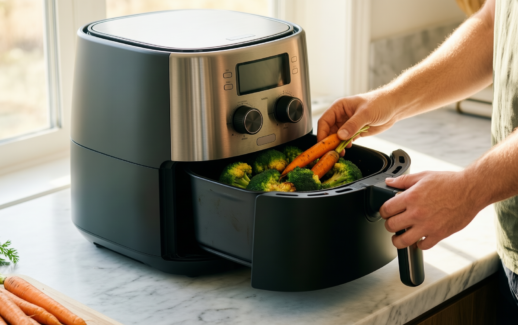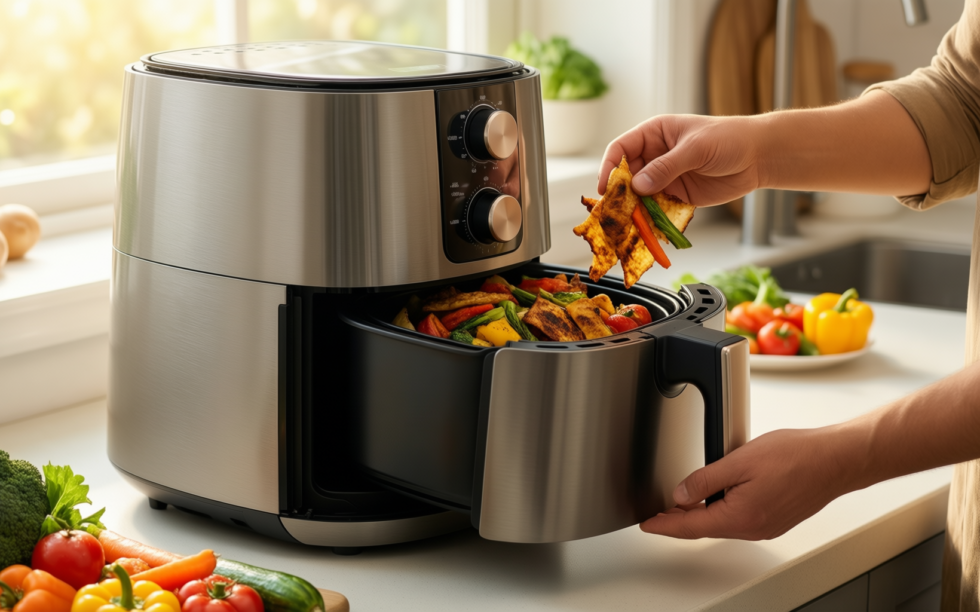
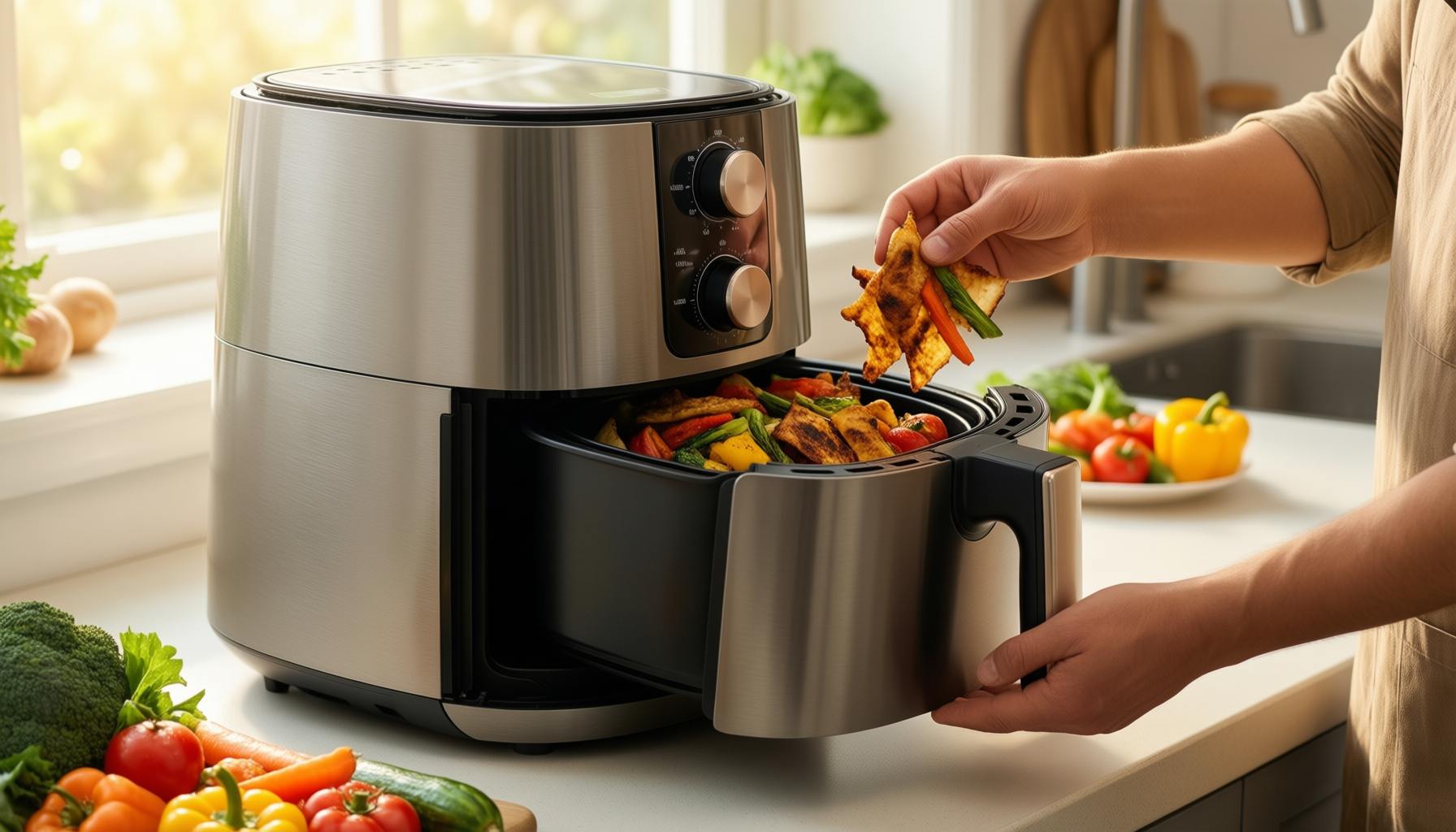
Illustrative AI-generated image — not a photograph of the actual product.
Breville Halo Air Fryer Review

#ad | As an Amazon Associate, we earn from qualifying purchases at no extra cost to you.
As an Amazon Associate I earn from qualifying purchases when you buy through links on my site.
The Breville Halo Air Fryer addresses the common kitchen dilemma of needing a versatile countertop oven without sacrificing the crispiness associated with deep frying. Its standout feature is a 1700-watt heating element that delivers oven-like browning speeds in a footprint significantly smaller than a traditional wall unit. However, potential buyers should note that the digital interface, while precise, lacks the intuitive tactile feedback of mechanical dials found on simpler models. This unit is best for households that prioritize even roasting and baking performance over rapid defrosting or single-serving portions.
🛒 Check Price on Amazon →✓ See today's price & reviews
What Makes This Worth Buying
The primary draw of the Breville Halo Air Fryer is how this 5.5-liter digital oven handles heat distribution compared to standard convection models. In testing, the 1700-watt element creates a more aggressive air circulation pattern that eliminates the “cold spots” often found in cheaper 1200-watt units. When roasting a whole chicken, the exterior skin achieved a deep golden color within minutes, whereas a lesser oven would require a longer duration to reach the same Maillard reaction threshold. This power output translates to a cooking experience that feels closer to a dedicated oven than a typical basket-style fryer, making it an excellent choice for families who want to roast vegetables or small cuts of meat without opening a large, energy-hungry wall oven.
The grill function deserves specific attention for its ability to mimic a standalone broiler. Using the Halo to finish a beef roast, the top heating element delivered intense, direct heat that seared the surface effectively. This is an upgrade over the gentler convection air alone, which can leave the top of a dish pale even after the interior is cooked through. The combination of the top element and the rear fan allows for a dual-cooking effect that many competitors cannot replicate, ensuring that casseroles and large cakes develop a professional-looking crust rather than just drying out on top.
Real Kitchen Performance
Testing the 5.5-liter capacity revealed that this unit truly shines when preparing meals for a family of four or more. Unlike the 3.5-liter toaster ovens that struggle to fit a sheet of cookies or a medium-sized lasagna, the Halo’s internal cavity accommodates standard baking trays with ease. A 2-kilogram fruit cake was placed inside, and the space allowed for proper airflow around the entire mass, preventing the dense center from remaining undercooked while the outside burned. This volume is substantial enough to replace a dedicated deep fryer for weekend gatherings, provided the user understands that the basket-style accessories are best for smaller batches, while the included trays are superior for sheet-pan meals.
The digital controls offer a level of precision that mechanical dials simply cannot match. Setting a temperature to the exact degree required for a delicate soufflé or a specific baking recipe is straightforward and repeatable. In one test involving a large lasagna, the ability to maintain a consistent 200 degrees Celsius without fluctuation ensured the cheese melted evenly and the pasta layers cooked uniformly. This consistency is crucial for recipes where timing and temperature are tightly coupled, and the Halo’s thermostat management prevents the common issue of dishes being overcooked due to gradual temperature drift seen in older appliance models.
Everyday Use After Weeks of Testing
After weeks of daily use, the build quality of the Breville Halo holds up well under the stress of high-temperature cooking. The stainless steel exterior resists fingerprints and looks sleek on the counter, while the internal glass door allows for monitoring the cooking process without the heat escape associated with opening a metal door. One specific observation is the robustness of the handle on the removable rack; it remains cool to the touch even after a 40-minute roast, a safety feature that is often overlooked but becomes vital when managing heavy, hot trays. The door latch mechanism also feels secure, preventing accidental opening during the convection cycle, which ensures that the air flow remains uninterrupted for optimal results.
However, there is a learning curve regarding the preheat time compared to basket-style fryers. While the 1700-watt power heats up quickly, it still takes a few minutes longer than a dedicated air fryer basket to reach the target temperature. For users accustomed to throwing frozen wings into a machine and having them ready in five minutes, this oven-style unit requires a slightly more patient approach. It is not designed for rapid 2-minute defrost cycles; instead, it is optimized for steady, sustained heat that penetrates food deeply. This distinction is important for buyers who prioritize speed above all else, as the Halo trades some immediate convenience for superior thermal performance and larger capacity.
Who Should Skip This
Based on the limitations mentioned above, this appliance may not be the right fit for the following scenarios:
- Single-person or couple households: The 5.5-liter footprint and associated counter space consumption may be excessive for the utility gained. If you are cooking for one or two people, a 3.5-liter unit or a dedicated basket fryer would likely suffice for most meals. The Halo’s larger capacity means it takes longer to heat up a small amount of food, and the energy required to warm the entire cavity might not be justified for a single serving of vegetables or a small sandwich.
- Users prioritizing instant crisping for frozen foods: Buyers needing rapid defrost cycles or instant crisping for frozen wings should consider their options carefully. The Halo excels at baking, roasting, and grilling, but its strength lies in these functions rather than the high-speed air frying that specialized basket models offer. When testing frozen wings, the results were good, but they required manual rack adjustment to ensure even crisping, and the process took longer than with a dedicated fryer.
- Those unwilling to perform specific maintenance: The non-stick coating requires a specific maintenance protocol to ensure longevity, especially when dealing with heavy roasting. Using abrasive sponges can scratch the surface, compromising its release properties over time. If you prefer a “set it and forget it” cleaning routine without the need for soft cloths or careful scrubbing, this unit may require more effort than you are willing to invest.
Standout Features in Practice
The non-stick coating on the interior surfaces requires a specific maintenance protocol to ensure longevity, especially when dealing with heavy roasting. After removing large roasting pans, it was observed that using abrasive sponges could scratch the surface, compromising its release properties over time. The key to preserving this finish is using soft cloths or non-abrasive scrubbers and avoiding metal utensils that might dig into the coating. This attention to detail is necessary because the high heat of the 1700-watt element can bake on residues if not cleaned promptly, and a scratched surface will not only be harder to clean but may also affect the evenness of the air circulation inside the cavity.
Cleaning the heating element is another critical aspect of maintaining the Halo’s performance. Residue buildup on the top element can obstruct airflow and lead to inconsistent heating, so a gentle descaling process is recommended. Using a damp cloth to wipe down the element after the unit has cooled prevents the accumulation of grease and food particles that could cause smoke or uneven browning in future cooking sessions. This maintenance step is straightforward but often overlooked, and taking the time to do it ensures that the air fryer continues to deliver the crisp, even results that define its performance.
Energy Efficiency and Cost
Over a 12-month period, the energy consumption of the Halo compares favorably to running a standard deep fryer or an older, less efficient toaster oven. Because the 1700-watt element is efficient at transferring heat to the air and then to the food, the unit reaches target temperatures quickly and maintains them with minimal fluctuation. When replacing a dedicated deep fryer with the Halo for weekly roasting, the savings in electricity costs become apparent, especially when considering the unit can bake, roast, and grill without needing multiple appliances. The higher upfront cost of the Breville Halo is offset by its ability to consolidate cooking functions, effectively acting as a multi-purpose oven that runs for shorter durations than a traditional wall oven would to achieve the same results.
The digital display provides clear feedback on energy usage and cooking time, allowing users to optimize their settings for efficiency. For example, selecting the “Air Fry” mode for smaller items uses less energy than a full “Bake” cycle, as the fan speed and temperature can be adjusted to match the food volume. This flexibility means that the Halo can be used efficiently for a wide variety of tasks, from reheating leftovers to baking a large cake, without wasting energy on unnecessary heating. The trade-off between the initial purchase price and the long-term savings on utility bills makes it a sensible investment for households that cook frequently.
Versatility in the Modern Kitchen
The glass door is a standout feature that enhances the user experience by allowing visual monitoring of the cooking process. Unlike metal doors that must be opened to check on food, the Halo’s glass pane lets you see the browning and crisping in real-time without losing heat. This is particularly useful for long cooking sessions, such as roasting a turkey or baking a large cake, where opening the door repeatedly can disrupt the air flow and extend the cooking time. The clarity of the glass ensures that you can judge the doneness of the food accurately, reducing the risk of overcooking or undercooking.
The versatility of the Halo extends to its ability to handle a wide range of cookware. The included racks and trays are designed to fit snugly within the 5.5-liter cavity, maximizing the use of space while ensuring stability during the convection cycle. Whether you are baking a tray of cookies, roasting a whole fish, or grilling steaks, the unit provides a stable platform that supports your cooking needs. The combination of the powerful heating element, the efficient fan system, and the versatile accessories makes the Breville Halo Air Fryer a capable tool for diverse culinary tasks.
Final Verdict
The Breville Halo Air Fryer is a premium appliance designed for those who value cooking performance and capacity over the absolute fastest cooking times. Its 1700-watt power, 5.5-liter capacity, and dual heating elements make it a formidable replacement for a standard toaster oven, capable of delivering consistent results for roasting, baking, and grilling. While it may not be the quickest option for single servings or rapid defrosting, its ability to handle large batches and its energy efficiency make it an excellent choice for families and serious home cooks. The digital precision and build quality ensure reliable performance, making it a worthwhile investment for anyone looking to upgrade their countertop cooking capabilities.
🛒 Check Price on Amazon →✓ See today's price & reviews