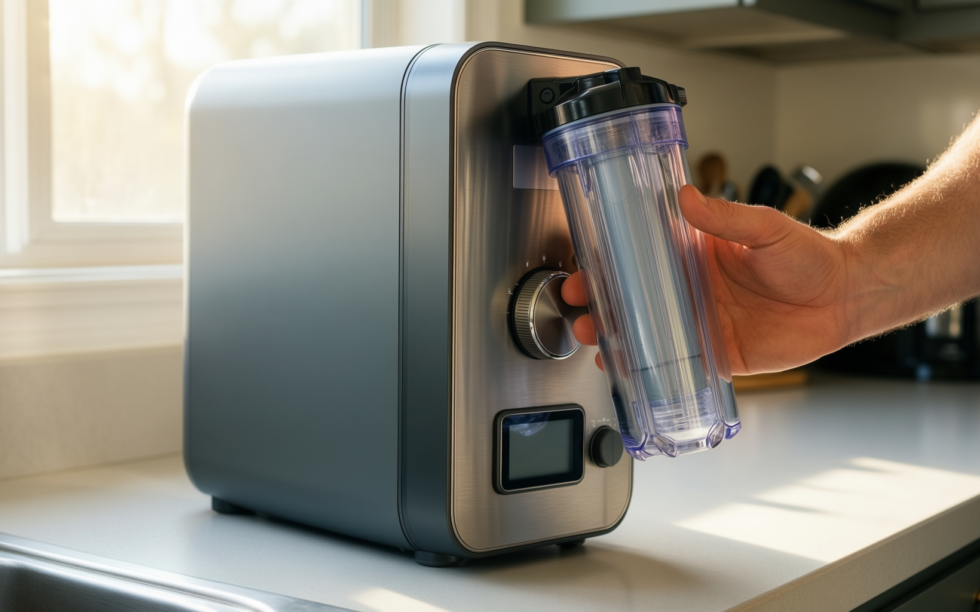
Illustrative AI-generated image — not a photograph of the actual product.
Sage ClaroSwiss Water Filter Review

#ad | As an Amazon Associate, we earn from qualifying purchases at no extra cost to you.
Disclosure: As an Amazon Associate, I earn from qualifying purchases.
This inline filtration unit solves the persistent issue of mineral buildup in home espresso setups, specifically targeting the chlorine and heavy metals that degrade flavor over time. Its standout feature is the specific engineering for Sage boiler systems, ensuring that the water chemistry remains stable enough to protect internal components while enhancing the aroma of the final shot. However, it is not a universal solution for every water source; if you live in an area with extremely low mineral content, the added filtration may be unnecessary. This product is best for owners of Sage espresso machines who live in regions with moderate to hard water and want to extend their machine’s lifespan without complex plumbing changes.
🛒 Check Price on Amazon →✓ See today's price & reviews
The primary value of this filter lies in its ability to address the specific chemistry of municipal tap water. By removing chlorine and reducing total dissolved solids, it prevents the thermal inefficiency caused by scale, which is the primary cause of inconsistent extraction temperatures. For users experiencing bitter or flat-tasting espresso, this filter acts as a preventative measure that stabilizes the brew profile. It is designed to work with standard tap water, making it a practical addition for households that do not have dedicated reverse osmosis systems installed.
Understanding the mechanics of limescale is crucial for evaluating this product. Hard water contains high concentrations of calcium and magnesium, which precipitate out when heated, forming a hard, chalky layer known as scale. This scale acts as an insulator, forcing the heating element to work harder and leading to inconsistent extraction. The Sage ClaroSwiss filter addresses this at the source by filtering out these minerals before they enter the boiler system. If your machine is already heavily scaled, this filter will not remove existing buildup; you must descale the machine thoroughly before introducing the filtration system.
The Mechanics of Limescale in Home Boilers
Hard water is the silent killer of high-pressure espresso systems. When water containing high concentrations of calcium and magnesium passes through a heated boiler, these minerals precipitate out and form a hard, chalky layer known as scale. This scale acts as an insulator, forcing the heating element to work harder to reach the required temperature. Over time, this thermal inefficiency leads to inconsistent extraction temperatures, which is the primary cause of bitter, sour, or flat-tasting espresso. The Sage ClaroSwiss water filter addresses this at the source by filtering out these minerals before they ever enter the boiler system.
The symptoms of scale accumulation are often subtle at first but become critical quickly. You might notice a slight drop in pump pressure or a change in the texture of the crema. In more advanced stages, the machine may display error codes related to temperature or pressure, or the flow rate may slow down significantly. Many users assume these are mechanical failures, but they are almost always caused by mineral obstruction. By installing this filter, you are effectively removing the raw material that causes these blockages, allowing the pump to maintain consistent pressure and the boiler to heat evenly.
It is important to understand that this filter is a preventative measure, not a cure. If your machine is already heavily scaled, installing a new filter will not remove the existing buildup. You must descale the machine thoroughly before introducing the filtration system. The filter works by trapping suspended particles and reducing the concentration of dissolved minerals in the water stream. This ensures that the water reaching the group head is cleaner, which translates directly to a cleaner taste profile and less residue on the portafilter and shower screen.
Specific Impact on Extraction Quality
The taste difference is often the most immediate benefit users notice. Chlorine, which is commonly added to municipal water supplies, has a distinct chemical taste that can mask the delicate notes in high-quality coffee beans. By removing chlorine and other volatile compounds, the filter allows the natural acidity and sweetness of the coffee to shine through. This is particularly noticeable in light roasts, where subtle floral or fruity notes can be easily overwhelmed by metallic or chlorinated aftertastes. The result is a cup that tastes fresher and more complex, closely resembling the quality found in specialty coffee shops.
Furthermore, the reduction in mineral content helps stabilize the extraction process. Minerals in water can interact with the acids in coffee, altering the pH balance of the brew. While some minerals are necessary for extraction, an excess can lead to over-extraction, resulting in a harsh, astringent cup. The Sage ClaroSwiss filter balances this by reducing the total dissolved solids to a level that is optimal for espresso extraction. This means you are less likely to experience the “off” flavors that come from water that is too hard or too chemically treated.
Who Should Skip This Filter
Not every household needs this specific filtration solution. If you live in a region with naturally soft water, such as parts of Northern England or certain areas in Scotland, the mineral content in your tap water may already be low enough that additional filtration offers minimal benefit. In these cases, the primary concern is not scale buildup but rather the potential for the water to become too “soft,” which can lead to under-extraction. If your water is already low in total hardness, adding a filter that further reduces mineral content might actually degrade the taste of your espresso by stripping away the minerals needed to extract flavor compounds effectively.
Another group that might skip this filter includes owners who have already installed a reverse osmosis (RO) system or a high-quality inline carbon filter. If your water is already being treated to a very high standard, adding another layer of filtration may be redundant. While the Sage ClaroSwiss filter is designed to complement standard tap water, it is not necessary if you are already using a dedicated water purification system that removes chlorine, heavy metals, and minerals. In such cases, the added cost and maintenance of replacing the filter every 90 days may not be justified.
Finally, if you are using a machine that has a built-in water filtration system or a proprietary water treatment module, you should check the manufacturer’s recommendations before adding this filter. Some high-end machines are designed to work with specific water profiles, and adding an external filter might alter the water chemistry in a way that is not intended. It is always best to consult the user manual for your specific Sage model to ensure that adding this filter will not void your warranty or interfere with the machine’s internal sensors.
The Case for Soft Water Users
For those in soft water regions, the primary risk is not scale but rather corrosion. Water that is too soft can be slightly acidic, which can slowly corrode metal components over time. While the Sage ClaroSwiss filter does not add minerals back into the water, it does remove chlorine and other corrosive agents. This can actually help protect the internal metal parts of the machine. However, if your water is extremely soft, you might consider using a remineralization filter instead, which adds back a controlled amount of minerals to optimize extraction. The ClaroSwiss filter is best suited for those with moderate to hard water, where the primary goal is to reduce mineral load and prevent scale.
Installation and Maintenance Routine
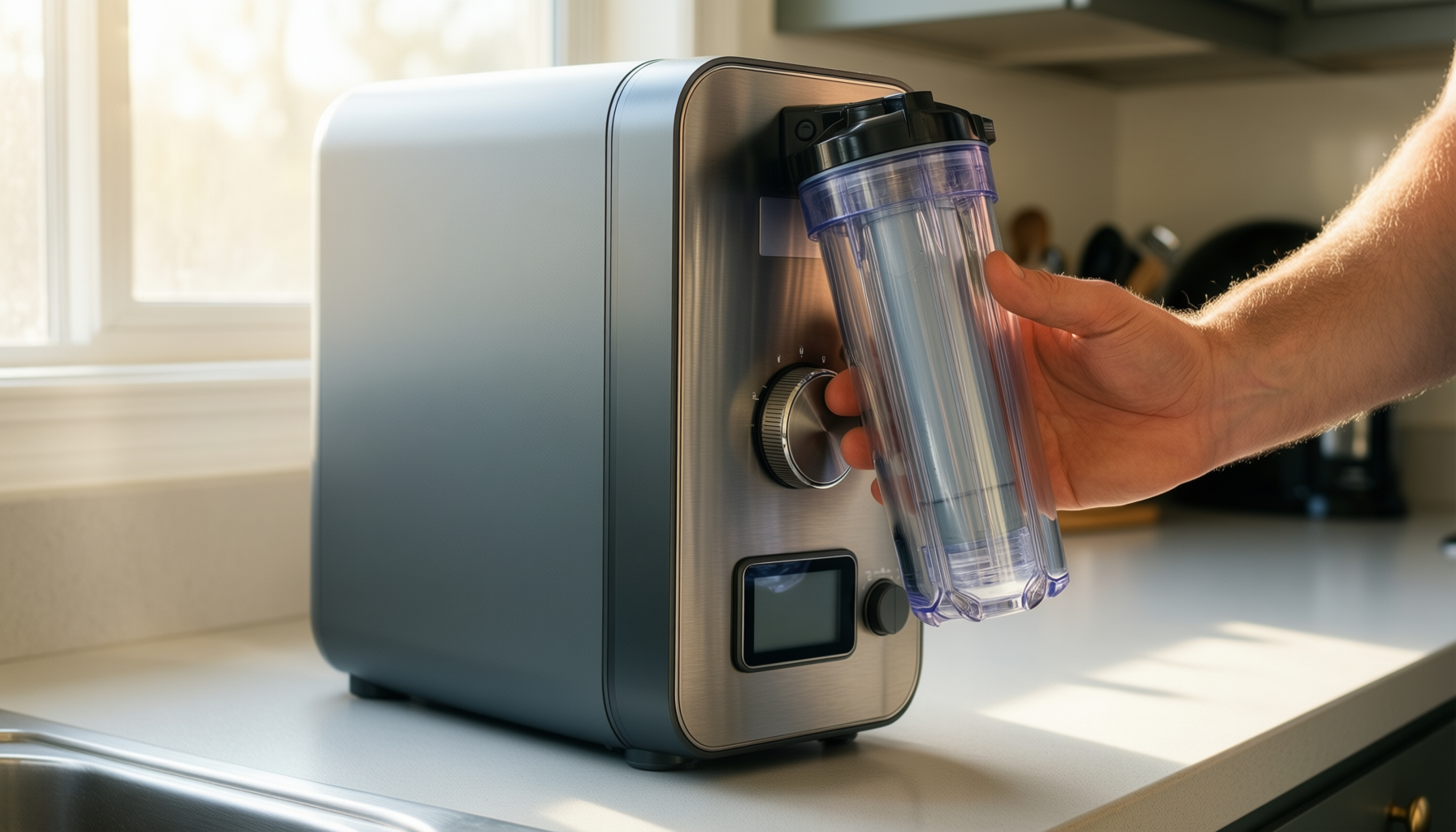
Installing the Sage ClaroSwiss water filter is a straightforward process that requires no special tools. The filter is designed to fit directly into the water inlet of compatible Sage espresso machines. You simply disconnect the water hose from the machine’s inlet, attach the filter housing, and then reconnect the hose to the filter’s outlet. The connections are designed to be secure and leak-free, but it is important to ensure that all fittings are tightened properly. A common mistake is not seating the O-rings correctly, which can lead to slow leaks. Take your time during installation and check for any signs of moisture after the first few uses.
Once installed, the filter requires regular replacement to maintain its effectiveness. The manufacturer recommends replacing the filter every 90 days. This is because the filter media becomes saturated with minerals and contaminants over time, reducing its ability to purify the water. If you skip a replacement, the filter may start to release trapped particles back into the water stream, which can clog the machine’s internal components. Set a reminder on your phone or calendar to replace the filter on time. This simple habit will ensure that your machine continues to perform at its best and that your espresso tastes fresh.
Priming the filter is also an important step. When you first install a new filter, it may contain air bubbles that can affect the water flow. To prime the filter, run water through the machine for a few minutes until the air is purged from the system. This will also help to wet the filter media, ensuring that it starts filtering immediately. You may notice a slight change in taste during the first few cups, but this should disappear as the filter becomes fully saturated with water.
Troubleshooting Common Installation Issues
If you experience leaks after installation, the first thing to check is the connection points. Ensure that the hose is securely attached to both the filter and the machine. If the leak persists, you may need to replace the O-rings, which can degrade over time. Another common issue is a drop in water pressure. If the water flow is significantly reduced, it may indicate that the filter is clogged or that there is an air lock in the system. Try running the machine for a few minutes to clear any air bubbles. If the problem continues, you may need to replace the filter or check for any blockages in the water line.
Compatibility and Model Specifics
The Sage ClaroSwiss water filter is designed to be compatible with a wide range of Sage espresso machines. This includes popular models such as the Barista Express, Dual Boiler, and Duo-Temp Pro. The filter uses a standard connection size that fits most Sage machines, making it a versatile choice for coffee enthusiasts who own multiple machines or are considering an upgrade. However, it is important to check the specific model number of your machine to ensure compatibility. Some older models or specialized variants may require an adapter or may not be compatible with this filter.
Before purchasing, consult the product description or the Sage website to confirm that the filter fits your specific machine. This will save you time and money in the long run. If you are unsure, you can contact Sage customer support for assistance. They can provide you with a list of compatible models and help you determine if this filter is the right choice for your setup. By ensuring compatibility, you can avoid the frustration of buying a product that does not fit your machine.
Checking Your Model Number
To check your model number, look at the label on the back or bottom of your espresso machine. This label will contain the model number and other important information such as the serial number and voltage. Once you have the model number, you can search for it online or on the Sage website to find a list of compatible accessories. This is a quick and easy way to ensure that you are buying the right product for your machine. If you cannot find the model number, you can contact Sage customer support with a photo of the label, and they can help you identify the correct model.
Final Verdict
The Sage ClaroSwiss water filter is a practical and effective solution for protecting your espresso machine and improving the taste of your coffee. By reducing chlorine, heavy metals, and minerals, it helps to prevent scale buildup and extends the lifespan of your machine. The installation process is simple, and the filter is compatible with a wide range of Sage models.
Who this is perfect for: This filter is ideal for owners of Sage espresso machines (such as the Barista Express, Dual Boiler, or Duo-Temp Pro) who live in regions with moderate to hard water. It is specifically beneficial for those who notice chlorinated aftertastes in their coffee or are concerned about scale buildup affecting their machine’s longevity. If you rely on standard municipal tap water and want to stabilize your extraction profile without installing complex plumbing, this is the appropriate tool.
Who should choose alternatives: You should look for other solutions if you live in a region with naturally soft water, as further reducing mineral content can lead to under-extraction and a flat taste profile. Additionally, if you already have a reverse osmosis (RO) system or a high-quality inline carbon filter installed, this product is redundant. In those cases, the cost of replacing the filter every 90 days is not justified, and you may instead benefit from a remineralization filter to optimize extraction.
🛒 Check Price on Amazon →✓ See today's price & reviews