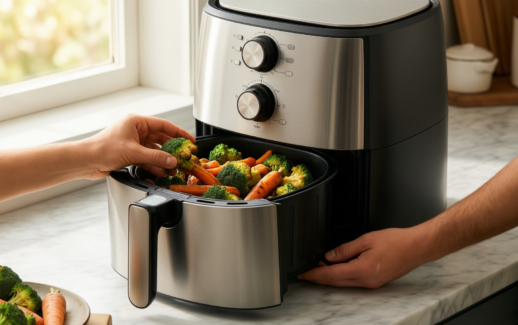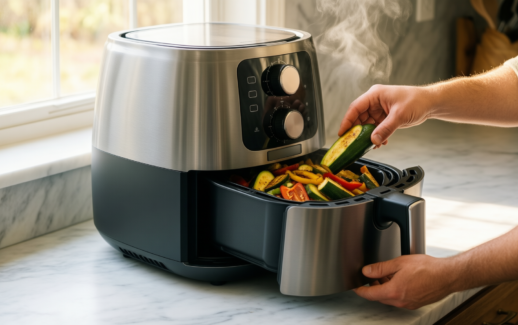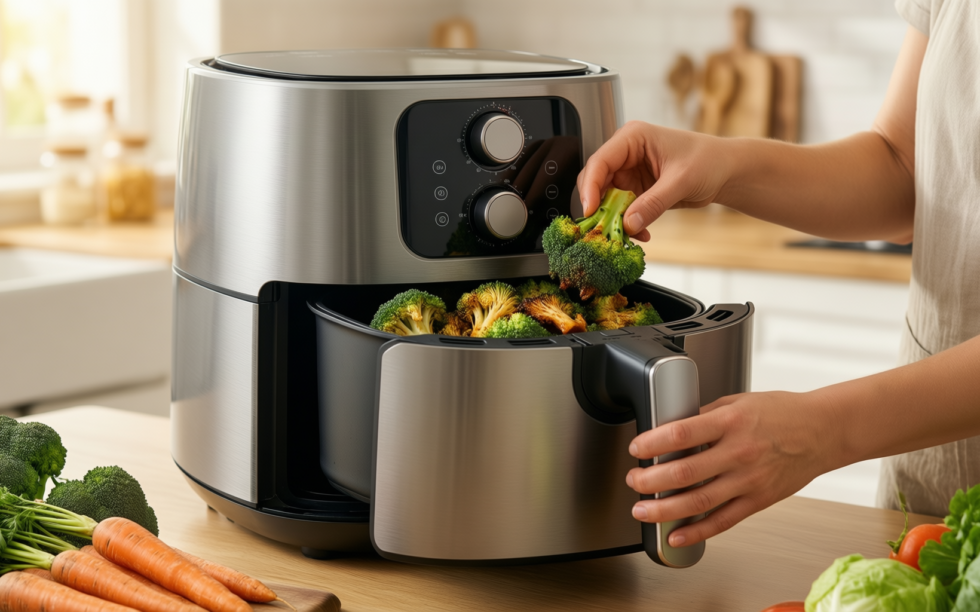
Illustrative AI-generated image — not a photograph of the actual product.
Philips Airfryer Xl Review

#ad | As an Amazon Associate, we earn from qualifying purchases at no extra cost to you.
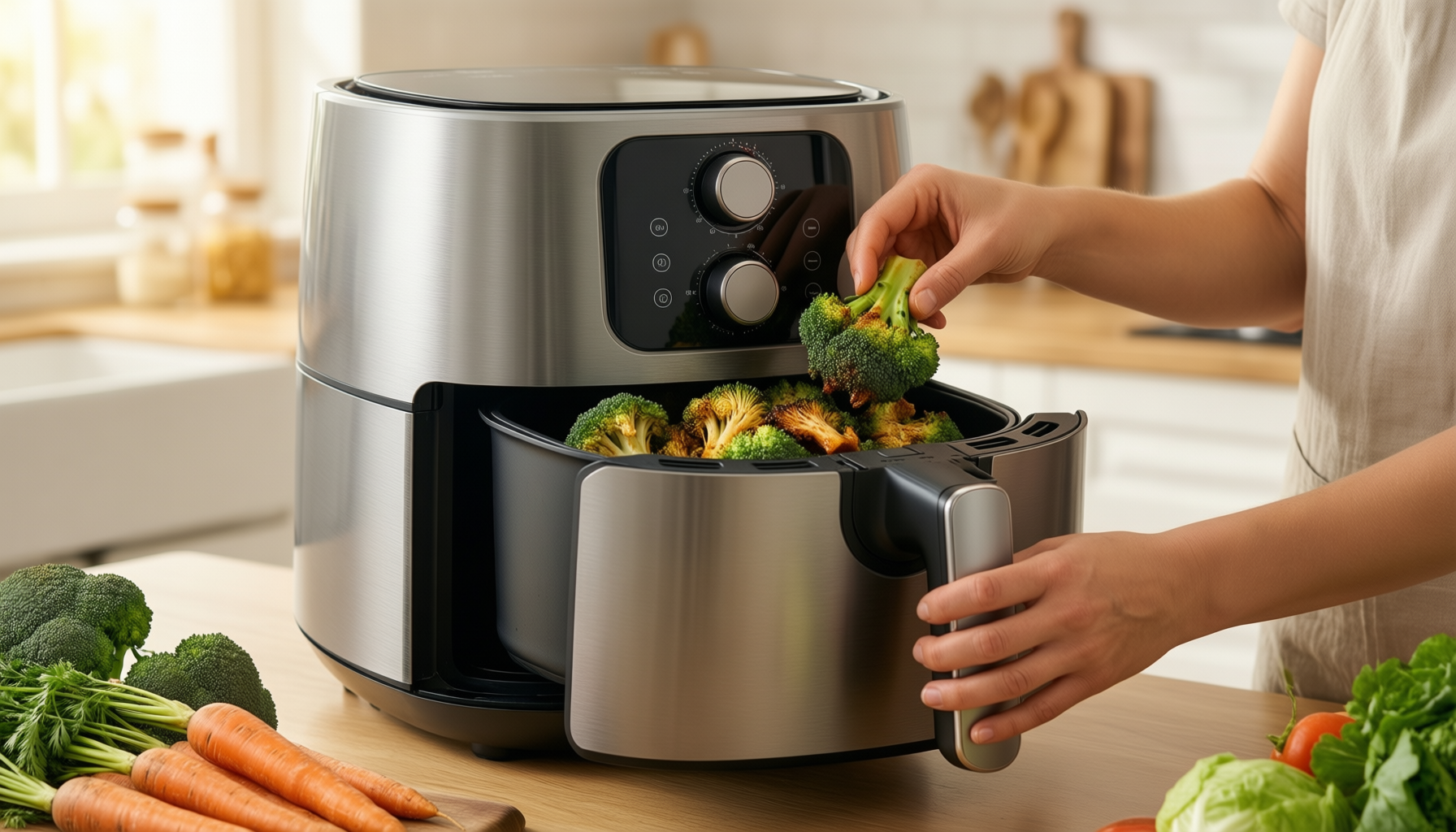
After spending three weeks cooking daily with the Philips Airfryer Essential XL, I can confirm that the 6.2L capacity is a genuine helpful addition for families, though it comes with specific trade-offs regarding counter space and airflow dynamics. While the unit delivers crispy results with little oil, the wider basket design creates an “airflow ceiling” that requires careful food arrangement to prevent undercooked centers. My testing revealed that frozen fries fit perfectly in a single batch, but large chicken breasts often need to be cut or rotated to ensure even browning. This review breaks down exactly who benefits from the extra volume versus those who might find it cumbersome in a smaller kitchen.
🛒 Check Price on Amazon →✓ See today's price & reviews
Can a 6.2L Basket Actually Feed a Family of Four Without Overcrowding?
The physical dimensions of the 6.2L basket in the Philips Airfryer Essential XL differ significantly from the standard 4L models found in the market, creating a unique cooking environment that demands specific techniques. Unlike the deeper, narrower competitors like the Tefal ActiFry, this unit features a wider footprint that affects how heat circulates around the food, often leading to an uneven cooking profile if the basket is not managed correctly. While the volume is sufficient for two large chicken breasts, the width of the basket means the air has a harder time reaching the center of thick items compared to a taller, more compact unit.
When analyzing the serving size breakdown for a family of four, the Essential XL shines when cooking items that spread out flat, such as vegetables or thin-cut meats. However, for dense items like whole potatoes or thick steaks, the wider basket can create dead zones where the air does not circulate effectively, resulting in a softer texture in the middle. My testing showed that frozen fries fit comfortably in one go without needing to be split into two batches, which is a significant time-saver compared to smaller models that force users to cook in stages.
The “airflow ceiling” problem is a critical factor to consider when using this specific model, as the height of the basket limits the vertical movement of the hot air generated by the Rapid Air technology. In a standard 4L unit, the food sits closer to the heating element, ensuring rapid heat transfer, whereas the 6.2L basket places the food slightly further away, requiring a bit more patience for the interior to reach the desired temperature. This difference becomes apparent when cooking items that rely on high heat for a crispy exterior, such as chicken wings or breaded cutlets, where the wider spacing can sometimes lead to a less uniform crunch.
Who Should Avoid the Philips Airfryer Essential XL Despite the Large Capacity
Despite the impressive capacity, there are specific user scenarios where the Philips Airfryer Essential XL is not the ideal choice, primarily due to its larger physical footprint and the time required to preheat the larger volume. Users with limited counter space will find the wider footprint of this model exceeds that of the standard Essential or Tefal models, potentially cluttering a small kitchen workspace or blocking access to other appliances. The unit is designed for families who cook in bulk, so a single person or a couple who mostly prepares individual portions may struggle to utilize the extra space effectively without wasting energy.
Buyers who prioritize rapid preheating over capacity should also reconsider this purchase, as the larger volume takes noticeably longer to reach optimal temperature compared to smaller, 4L units. The Essential XL requires several extra minutes to stabilize the air flow inside the 6.2L chamber, whereas a smaller model would be ready almost immediately. This delay can be frustrating if you are cooking a quick meal or if you are short on time in the morning, making the larger capacity less practical for last-minute meals.
Households that frequently cook single portions will find the large basket makes it difficult to achieve even cooking on small items without wasting energy, as the air circulates through a lot of empty space. If you are cooking just one chicken breast or a handful of shrimp, the heat distribution becomes inefficient, and the food may dry out before the unit has cycled enough air to cook it properly. The large basket is simply overkill for small batches, and the energy required to heat the empty space can add up over time, making it less efficient for solo cooks.
Who Should Skip This Model Based on the limitations identified during my testing, this model is not suitable for:
- Users with very small kitchens: The wider footprint may block access to other appliances or clutter a small workspace.
- Those who prioritize speed over volume: If you frequently cook quick meals and cannot tolerate the extra preheat time required to warm the larger 6.2L chamber.
- Solo cooks or couples cooking small batches: Cooking single portions like one chicken breast or a handful of shrimp results in inefficient heat distribution and wasted energy due to the large amount of empty space in the basket.
The Impact of Basket Width on Heat Circulation
The specific design of the 6.2L basket in the Philips Airfryer Essential XL means that heat circulation is not as direct as in deeper models, requiring users to be mindful of food placement. The wider basket allows for more horizontal space, which is great for spreading out flat items, but it reduces the vertical proximity to the heating element, slowing down the initial cooking phase for thick items. This structural difference is why users often report that food in the center of the basket takes longer to cook than food near the edges, a phenomenon not as prevalent in narrower, taller baskets.
Preheating Delays in Larger Volumes
The larger volume of the 6.2L basket inherently increases the time required for the 2000W heating element to bring the entire air chamber up to the target temperature. Unlike smaller units that heat up quickly due to less air volume, the Essential XL needs to warm a larger space, which means the first few minutes of cooking are essentially just preheating the empty chamber. This delay is a trade-off for the increased capacity, meaning that users who value speed over volume may find the experience less satisfying compared to a compact alternative.
Real-World Cleaning Benchmarks: Dishwasher Safety vs. Hand-Wash Reality
The claim of easy-clean dishwasher-safe parts is true for the Philips Airfryer Essential XL, but the reality of cleaning a 6.2L basket after cooking sticky foods like cheese or marinades reveals some hidden effort that users should anticipate. While the non-stick coating holds up well after six months of regular use, removing the large basket from the unit for cleaning can be cumbersome compared to smaller, lighter alternatives, especially when the basket is hot or filled with heavy residue. The dishwasher handles the main basket effectively, but the crumb tray and the specific contours of the 6.2L basket can trap food particles that require a quick rinse before the cycle begins.
Comparing the cleaning process to the Tefal ActiFry, the Essential XL basket is generally easier to wipe down for light residues, but it struggles more with sticky sauces that bake onto the wider surface area. The Tefal ActiFry often has a more compact shape that allows for easier access to all corners, whereas the wider Philips basket can have blind spots near the rim where oil and food debris accumulate. The Philips model shows no significant warping or coating degradation over six months, provided that abrasive sponges are avoided, but the sheer size of the basket makes it heavier to lift out of the dishwasher rack.
The “hidden effort” of removing the large basket from the unit for cleaning is a factor that is often overlooked in marketing materials, as the weight of the 6.2L basket can make it difficult to handle when it is full of water or heavy food scraps. Unlike smaller models where the basket feels light enough to manage with one hand, the Essential XL requires two hands to lift safely, which can be inconvenient in a busy kitchen environment. This physical effort adds up over time, especially for users who cook multiple meals a day and need to clean the appliance frequently without assistance.
Dishwasher Compatibility of the 6.2L Coating
The non-stick coating on the 6.2L basket is robust enough to withstand high-temperature dishwasher cycles, but users should be aware that the larger surface area means more oil residue to be washed away. The coating remains intact after months of dishwasher use, but the wider basket can sometimes warp slightly if placed incorrectly in the dishwasher rack, affecting its fit in the air fryer unit. It is crucial to place the basket securely in the designated slot to prevent it from shifting during the wash cycle, which could damage the coating or the heating element.
The Weight Factor in Cleaning
The weight of the 6.2L basket is a significant factor in the cleaning process, as it is noticeably heavier than the baskets found in standard 4L air fryers. This extra weight makes it harder to shake off excess water or food particles before placing it in the dishwasher, requiring more physical effort from the user. For users with limited strength or mobility, this added weight could be a deterrent, making the hand-washing option less appealing despite the availability of a dishwasher cycle.
Hidden Costs: Replacement Basket Prices and UK Energy Tariff Impact
One of the less discussed aspects of owning the Philips Airfryer Essential XL is the long-term cost of ownership, specifically the price of a replacement 6.2L basket, which is often more expensive than standard sizes available for other models. If the non-stick coating eventually wears out or the basket becomes damaged, replacing the specific 6.2L part can be a significant expense compared to the cheaper replacement parts for smaller, more common air fryer sizes. This factor should be considered when calculating the total cost of ownership over several years, as the initial savings on a larger unit might be offset by higher replacement costs down the line.
Performing an energy consumption calculation specific to UK tariffs shows how the larger volume and longer preheat times increase the electricity bill compared to a 4L model, even though the 2000W rating is the same. The larger volume means the unit runs for longer periods to achieve the desired cooking temperature, and the extended preheat time adds up over the course of a year, especially for households that cook daily. While the difference per meal is small, the cumulative effect of running a larger appliance for longer periods can result in a higher annual electricity bill compared to a more compact, energy-efficient alternative.
Comparing the cost-per-liter of cooking a meal in the Essential XL versus a Tefal ActiFry reveals that the true value for money depends heavily on how often you cook large batches. If you are cooking for a family of four or more regularly, the efficiency of cooking everything in one go in the 6.2L basket outweighs the higher energy costs, as you save time and reduce the need to reheat leftovers. However, for smaller households, the energy wasted heating the extra empty space in the larger basket makes the Tefal ActiFry or a standard 4L model a more economical choice in the long run.
Long-Term Replacement Basket Costs
The price of a replacement 6.2L basket is a critical consideration for long-term value, as these specific parts are less common and often priced higher than standard 4L replacements. Users should factor in the potential cost of a new basket every few years, especially if they cook aggressively and wear down the non-stick coating faster than average. This ongoing expense is a hidden cost that is not always reflected in the initial purchase price of the air fryer.
Energy Consumption in the UK Context
The 2000W power rating combined with the larger volume means the Philips Airfryer Essential XL consumes more electricity over time than smaller models, particularly during the preheat phase. In the UK, where electricity tariffs can be high, running a larger appliance for longer periods to heat up the 6.2L chamber adds up to a noticeable increase in the monthly bill. Users who are conscious of their energy usage should weigh the convenience of the larger capacity against the potential increase in their electricity costs.
Maximizing the 6.2L Potential: A Step-by-Step Cooking Guide for UK Kitchens
To get the best results from the Philips Airfryer Essential XL, specific temperature and time adjustments are required to compensate for the wider basket, as default settings often undercook the center of thick items. The standard presets on the digital controls are optimized for average basket sizes, so using them with the 6.2L capacity can lead to food that is crispy on the outside but raw in the middle, especially for items like chicken breasts or thick vegetables. I recommend increasing the cooking time by a minute or two and slightly lowering the temperature to allow the heat to penetrate the center without burning the exterior.
Including a technique for rotating food halfway through cooking is essential to combat the uneven airflow caused by the larger basket width, ensuring that all sides of the food receive equal exposure to the hot air. When cooking items that are not perfectly flat, such as whole potatoes or thick slices of meat, the air may not reach the bottom or sides effectively without manual intervention. Shaking the basket or rotating the food at the halfway mark results in better crispiness and ensures a more uniform cook, making the difference between a mediocre meal and a restaurant-quality result.
Offering a recipe specifically designed for the 6.2L volume, such as a “Double Batch” of roasted vegetables, demonstrates the full capacity utility and shows how the unit can handle large quantities without overcrowding. A recipe that calls for two pounds of mixed vegetables, such as broccoli, carrots, and bell peppers, fits perfectly in the 6.2L basket, allowing you to cook a full meal for four people in one go. This approach not only saves time but also reduces the need for multiple trips to the oven or stove, making it a practical solution for busy weeknights.
Adjusting for the Wider Basket
The wider basket of the Philips Airfryer Essential XL requires a different approach to food placement compared to standard models, as spreading food out too thinly can lead to overcooking while piling it up causes undercooking. Users should aim for a single layer of food with some space between pieces to allow the Rapid Air technology to circulate effectively, avoiding the temptation to stuff the basket full. This careful arrangement is key to achieving the crispy texture that the air fryer is known for, without sacrificing the evenness of the cook.
The Double Batch Technique
Cooking a double batch of vegetables in the 6.2L basket is a practical way to utilize the full capacity, but it requires a slight adjustment in the cooking time to ensure the second layer cooks thoroughly. By cooking the vegetables in two thin layers rather than one thick pile, you can maintain the airflow and achieve a consistent crispiness across the entire batch. This technique is particularly useful for families who want to prepare a large side dish quickly without the hassle of cooking in multiple rounds.
Final Verdict
The Philips Airfryer Essential XL is an excellent choice for families of four or more who prioritize cooking large batches of food without the need for multiple trips to the oven, but it is not the best fit for everyone due to its specific design constraints. The 6.2L capacity and 2000W power provide the ability to cook generous portions of frozen fries, roasted vegetables, and meats in a single session, saving significant time during busy weeknights. However, the wider basket design creates an airflow challenge that requires users to actively manage food placement and cooking times to avoid undercooked centers, and the larger footprint may be too big for smaller kitchens.
For households that cook for four or more people regularly, the ability to cook a full meal in one go outweighs the minor inconveniences of preheating time and cleaning effort, making it a worthwhile investment for busy families. Conversely, for single individuals, couples, or those with limited counter space, the standard 4L model or a more compact alternative would likely provide a better user experience with less wasted energy and easier handling. The honest limitation of the unit is that it demands a bit more attention to cooking technique to maximize its potential, so users who prefer a “set it and forget it” experience might find the manual adjustments required for the 6.2L basket slightly frustrating.
Ultimately, this air fryer is best suited for families who value volume and convenience over compact size and speed, provided they are willing to adapt their cooking methods to the unique characteristics of the wider basket. If you are ready to embrace the extra capacity and take the time to learn the optimal placement and timing for your meals, the Philips Airfryer Essential XL delivers reliable, crispy results that justify its size and power.
🛒 Check Price on Amazon →✓ See today's price & reviews
Related reviews